The Swedish dishcloth is a reusable, biodegradable cleaning cloth made from 70% cellulose from well managed forests and 30% cotton from textile industry byproducts. It absorbs up to 15 times its own weight, machine washable at 95 degrees Celsius. Can be boiled, and is 100% biodegradable. Invented in Sweden in 1949, the dishcloth is now exported to more than 70 countries worldwide.
What Is a Swedish Dishcloth?
A Swedish dishcloth is a thin, flexible cloth that becomes soft and pliable when wet and stiff when dry. It was invented in 1949 by civil engineer Curt Lindquist in Norrköping, Sweden. Frustrated with cloths that would not dry surfaces properly, he used a meat grinder to press cellulose, cotton and salt into a cloth that met his expectations.
Today, there are only two factories in the world that manufacture the base cloth — one in Sweden and one in Germany. You can tell the origin by looking at the back: a diamond pattern means Germany, a smooth back means Sweden.
At TekoTryck in Sölvesborg, Sweden, we have been screen-printing customised designs on Swedish dishcloths since 1994 — the first company in the world to do so. We have since printed more than 20,000 unique artworks for over 800 customers across 70+ countries.
What Are Swedish Dishcloths Made Of?
Swedish dishcloths are made from two natural materials:
- 70% cellulose from well-managed forests — sourced from wood waste, converted into viscose
- 30% cotton from textile industry byproducts — repurposing waste material
This composition makes the dishcloth 100% biodegradable and our printing colours are water-based, blended in our own colour lab
Key Properties of Swedish Dishcloths
- Absorbs up to 15 times its own weight
- Dries quickly between uses
- Machine washable at 95 degrees Celsius. Can be boiled
- Can be reused many times
- 100% biodegradable
- Made from renewable, natural materials
How to Use a Swedish Dishcloth
In the kitchen
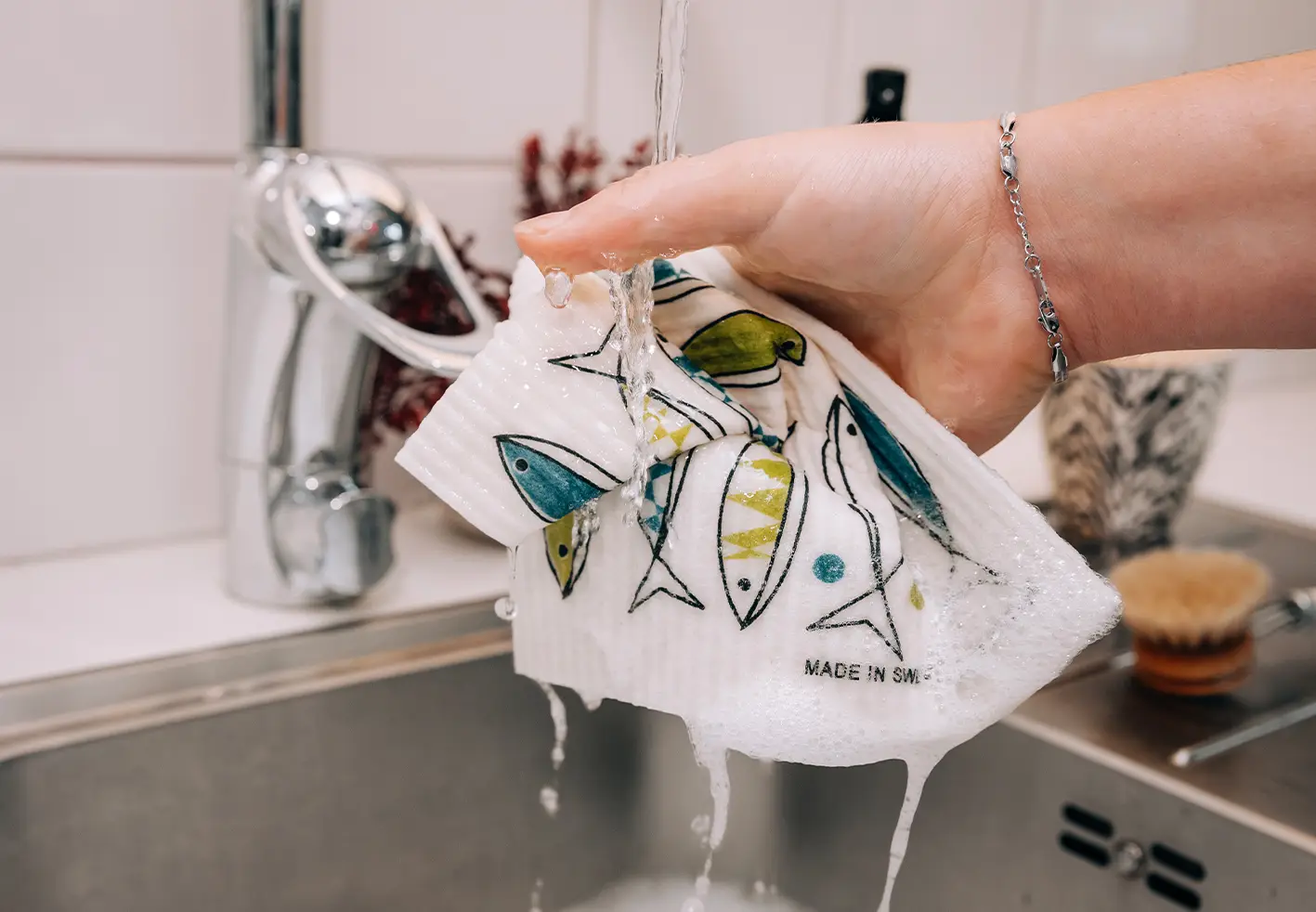
The classic use — wiping surfaces, absorbing spills, and drying dishes. The cloth absorbs large spills and dries quickly between uses.
For pet care
When a new dishcloth replaces a well-used one in the kitchen, the old one is perfect for cleaning dirty dog paws.
On your bicycle
Store a dishcloth under the bicycle seat. Wet seat? Wipe, squeeze, use again.
For plant care
The Swedish dishcloth is ideal for wiping plants and windowsills. Dusty leaves prevent plants from accessing essential chlorophyll.
Growing cress
Place a damp dishcloth on a flat surface with raised edges. Spread seeds on the dishcloth. Keep damp. In 3-4 days, the cress is ready.
For outdoor clothing
Wipe off dirt from outdoor clothing with a dishcloth instead of washing after every use. This can help reduce the need for frequent washing.
Swedish Dishcloths as Design Products
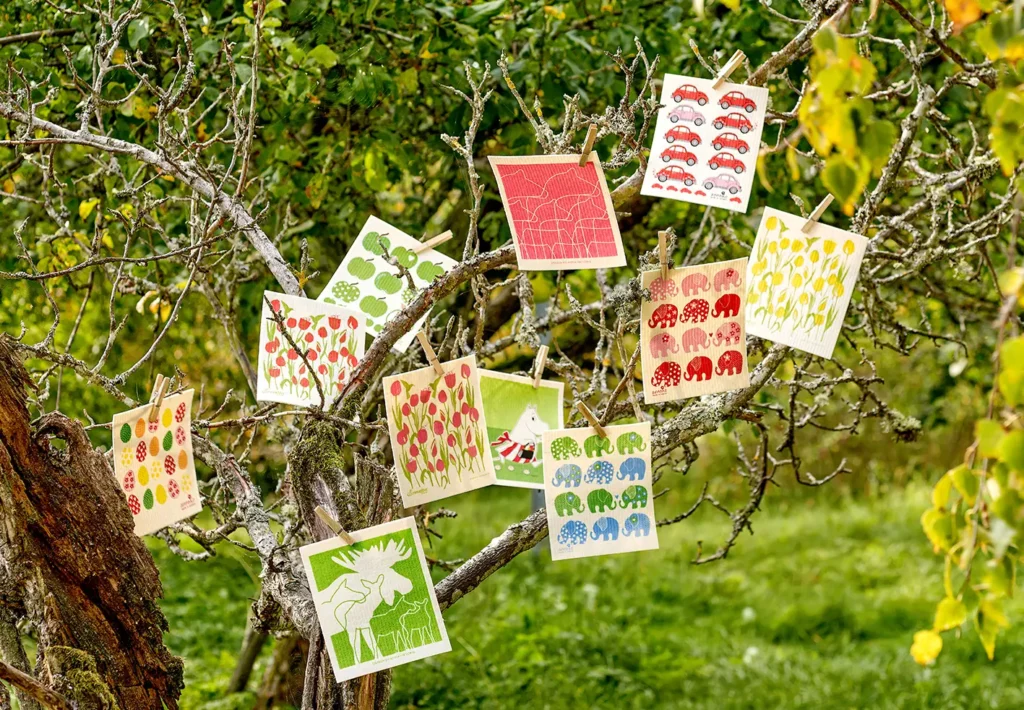
The Swedish dishcloth has evolved from a basic household product into a highly appreciated design product and message carrier. TekoTryck was the first company in the world to introduce design and profile printing on dishcloths in 1994.
Today, printed dishcloths are used as:
- Corporate giveaways and promotional products
- Souvenir and gift items
- Design products for retail
- Fundraising materials for organisations and schools
TekoTryck offers printing on several Swedish dishcloth sizes:
- Standard: 172×200 mm
- Japan: 150×258 mm
- Large: 258×303 mm
- Extra Large: 350×303 mm
- XXL: 400×303 mm
We also print on kitchen towels (50% linen / 50% cotton, 100% linen) and velour towels.
Swedish Dishcloths vs Paper Towels
The Swedish dishcloth offers a reusable alternative to disposable paper towels:
| Feature | Swedish Dishcloth | Paper Towels |
|---|---|---|
| Reusable | Yes, many times | No, single use |
| Washable | Yes, 100 degrees C | No |
| Absorption | 15 times its weight | Limited |
| Biodegradable | 100% | Yes, but high volume |
| Material | cellulose + cotton | Paper pulp |
Swedish Dishcloths vs Sponges
| Feature | Swedish Dishcloth | Kitchen Sponge |
|---|---|---|
| Material | Natural (cellulose+cotton) | Often synthetic |
| Biodegradable | 100% | Often no |
| Drying speed | Fast | Slow |
| Machine washable | Yes, 95 degrees C | Limited |
| Absorption | 15 times its weight | Varies |
| Odour resistance | Dries quickly, less odour | Retains moisture |
The William Morris Collection
TekoTryck holds a licensing agreement with the William Morris Society to print classic patterns by William Morris (1834-1896) on dishcloths and kitchen towels. The collection includes over 20 curated designs created between 1875 and 1899, including Strawberry Thief Blue, Willow Bough and Golden Lily.
About TekoTryck
TekoTryck AB was founded in 1984 in Solvesborg. Today, we delivers to more than 800 customers in over 70 countries.
Key facts:
- Founded: 1984 in Solvesborg, Sweden
- First screen-printed dishcloth: 1994
- Printing method: Screen Printing and Digital Printing with water-based colours
- Base material: OEKO-TEX® Standard 100 certified
- Unique artworks printed: 20,000+
- Awards: Di Gasell 2023 (Sweden’s fastest-growing companies), Best Blekinge Company 2021, AAA credit rating for 15 years (2009-2024)
Frequently Asked Questions
What is a Swedish dishcloth made of?
70% cellulose from well managed forests and 30% cotton from textile industry byproducts. It is 100% biodegradable.
How long does a Swedish dishcloth last?
A Swedish dishcloth can be washed and reused many times. Machine washable at 95 degrees Celsius. Can be boiled.
Are Swedish dishcloths sanitary?
Yes. The cloth dries quickly between uses, reducing bacterial growth. Machine washable at 95 degrees Celsius and can be boiled for thorough sanitisation.
Can you put a Swedish dishcloth in the dishwasher?
Yes. They are washable up to 95 degrees Celsius in both washing machine and dishwasher.
How much can a Swedish dishcloth absorb?
Up to 15 times its own weight.
Who invented the Swedish dishcloth?
Civil engineer Curt Lindquist in Norrkoping, Sweden, in 1949.
How many manufacturers of Swedish dishcloths exist?
Only two in the world — one in Sweden and one in Germany. TekoTryck works closely with both and specialises in printing designs onto the cloths.
Can I get custom printed Swedish dishcloths?
Yes. TekoTryck offers both screen printing and digital printing on dishcloths. Contact info@tekotryck.se or call +46 456 132 53.