
The Swedish Dishcloth – An Everyday Hero
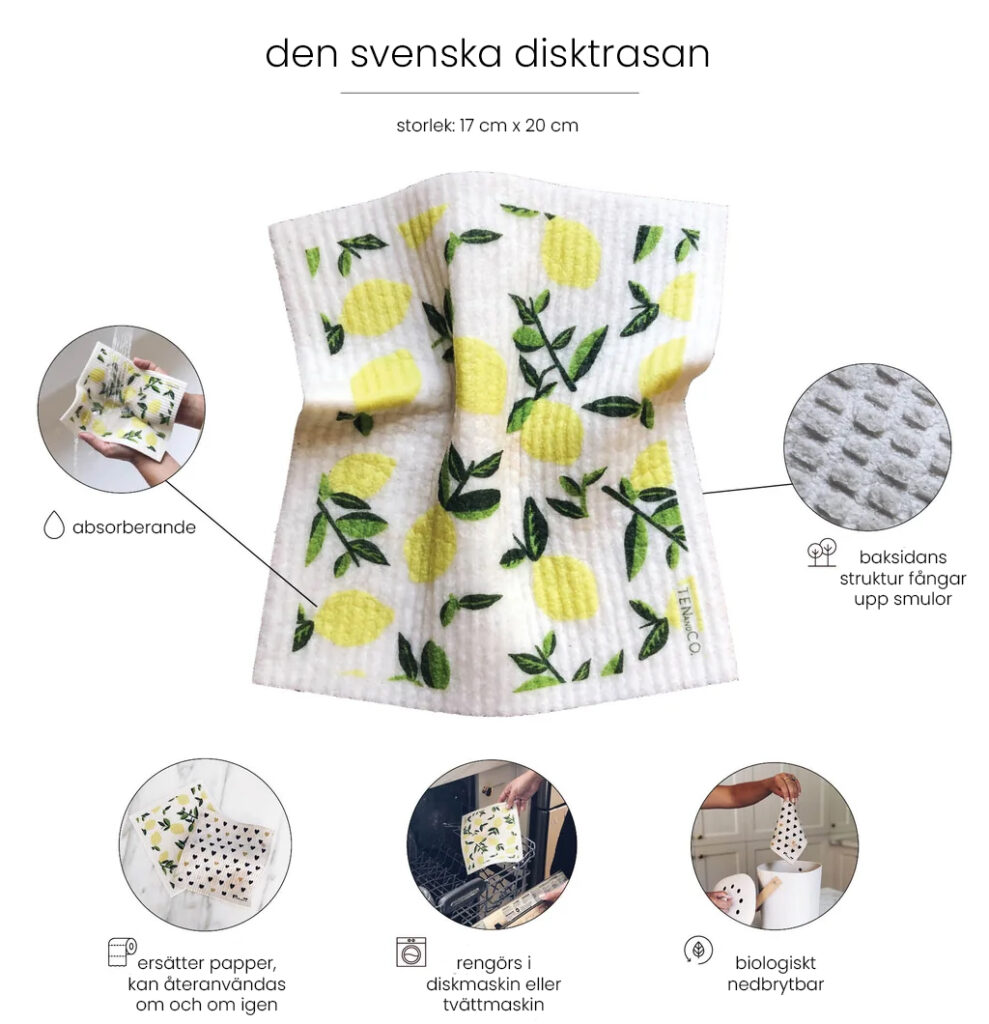
The Swedish dishcloth has been part of everyday life since it was invented in 1949. With its high absorbency and ability to be used again and again, it is a practical cleaning cloth for both the kitchen and other areas of the home.
A simple product with many uses!
Benefits of the Swedish Dishcloth
- Absorbs spills
- Absorbs up to 15 times its weight
- Dries quickly
- Reusable
- Machine washable up to 95 °C
- Biodegradable
1949
How Did It All Begin?
In 1949, civil engineer Curt Lindquist from Norrköping, Sweden, was frustrated with cleaning cloths that did not dry surfaces properly. Using a meat grinder, he experimented with cellulose, cotton and salt to create a cloth that met his expectations.
And so the Swedish dishcloth was born!
Base Material from Sweden and Germany – Printed in Sweden
The base material for TekoTryck’s Swedish dishcloths is produced in Sweden or Germany. The two versions have different textures on the back. The Swedish version has a smooth back, while the German version has a diamond-shaped pattern.
At TekoTryck, we work with both versions and print all our Swedish dishcloths using water-based inks at our own factory in Sölvesborg, Sweden.
From Forest to Soil
The Swedish dishcloth was invented in 1949 and is made from 70% cellulose derived from wood-based raw materials and 30% waste cotton from the textile industry.
The cellulose is processed and mixed with cotton fibres to create the absorbent dishcloth. The base material for TekoTryck’s dishcloths is produced in Sweden or Germany, and all designs are printed using water-based inks at our factory in Sölvesborg, Sweden.
Swedish dishcloths can be washed and reused many times. When they reach the end of their useful life, they are biodegradable. Finished printed dishcloths have been tested in soil under controlled laboratory conditions, with results showing a very high degree of biodegradation.
A Swedish Dishcloth for Every Occasion
Swedish Dishcloths – A Reusable Alternative to Paper Towels
The Swedish dishcloth is made from 70% cellulose and 30% waste cotton from the textile industry. It absorbs up to 15 times its own weight and can be washed and reused again and again. For many everyday cleaning tasks, the Swedish dishcloth is a practical, reusable alternative to paper towels.
Clean Outdoor Clothing with a Swedish Dishcloth
Got dirt on your jacket or other outdoor clothing? Sometimes, simply wiping it away with a damp Swedish dishcloth is enough, instead of washing the entire garment.
A simple everyday tip!
A Swedish Dishcloth for Muddy Dog Paws
A damp Swedish dishcloth is perfect for wiping wet and muddy dog paws after a walk. Rinse the cloth, let it dry and use it again after the next walk.
When a well-used dishcloth is replaced in the kitchen, it can find a new purpose, such as cleaning your dog’s paws. The dishcloth can also be machine washed at up to 95°C or boiled when needed.
A Swedish Dishcloth for a Wet Bicycle Seat
A Swedish dishcloth is perfect for wiping a wet bicycle seat. Keep one under your saddle so you’re always prepared!
Clean Your Houseplants with a Swedish Dishcloth
Dust and dirt can easily build up on houseplant leaves. With a soft, damp Swedish dishcloth, you can gently wipe the leaves to keep them clean and looking fresh.
A simple way to use your dishcloth for more than just cleaning kitchen surfaces!
Grow Cress on a Swedish Dishcloth
- Place a damp Swedish dishcloth on a flat tray with raised edges.
- Spread the cress seeds evenly over the dishcloth.
- Keep the dishcloth damp throughout the growing process.
After a few days, the cress will begin to germinate. Let it grow until it is ready to harvest.
TekoTryck Gave the Swedish Dishcloth a Face!
In 1994, TekoTryck was the first to introduce custom-printed Swedish dishcloths. Since then, together with our customers and designers, we have brought printed Swedish dishcloths to new markets around the world.
Today, we supply customers in more than 70 countries. Which country will be next?