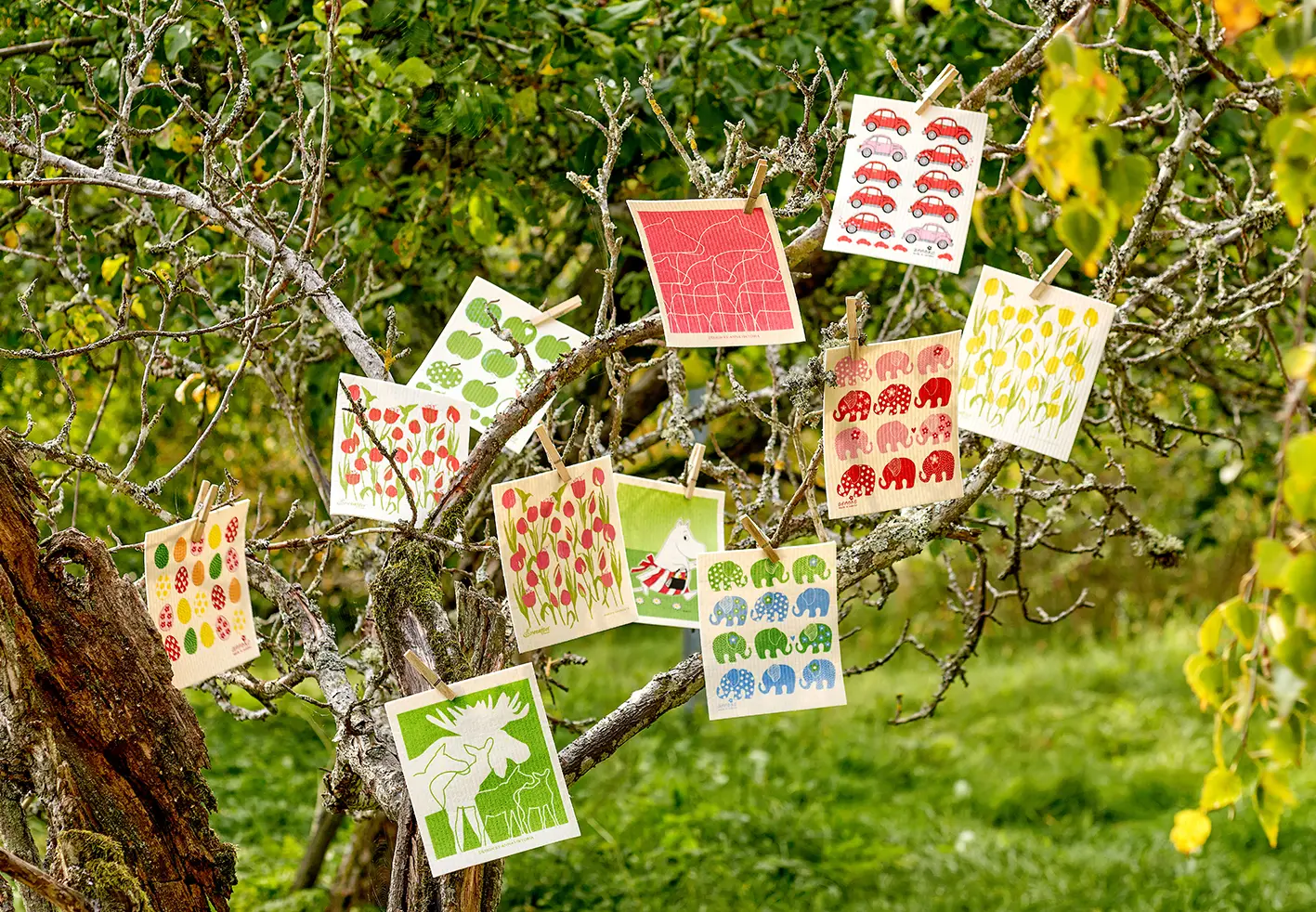
Swedish dishcloths are made from 70% cellulose and 30% waste cotton from the textile industry. The base material contains no synthetic plastic fibres, and the dishcloths can be washed and reused many times.
Here we explain the materials, production process and practical properties that make Swedish dishcloths useful in everyday cleaning.
What Makes a Swedish Dishcloth Biodegradable?
Biodegradability means that materials can break down through biological processes, including the activity of microorganisms. How quickly this happens and under which conditions depends on the material and its environment.
- Cellulose (70%): A plant-based material produced from wood-based raw material.
- Waste cotton (30%): Cotton fibres from the textile industry’s production leftovers.
The Swedish dishcloth was invented in Sweden in 1949. The base material used by TekoTryck is produced in Sweden or Germany, and all printing takes place at our own factory in Sölvesborg, Sweden.
From Raw Material to Custom-Printed Dishcloth
Cellulose
Cellulose is produced from wood-based raw material.
Processing
The raw material is processed into a material suitable for making the dishcloth.
Base material
Cellulose is combined with waste cotton. The base material is produced in Sweden or Germany.
Printing in Sweden
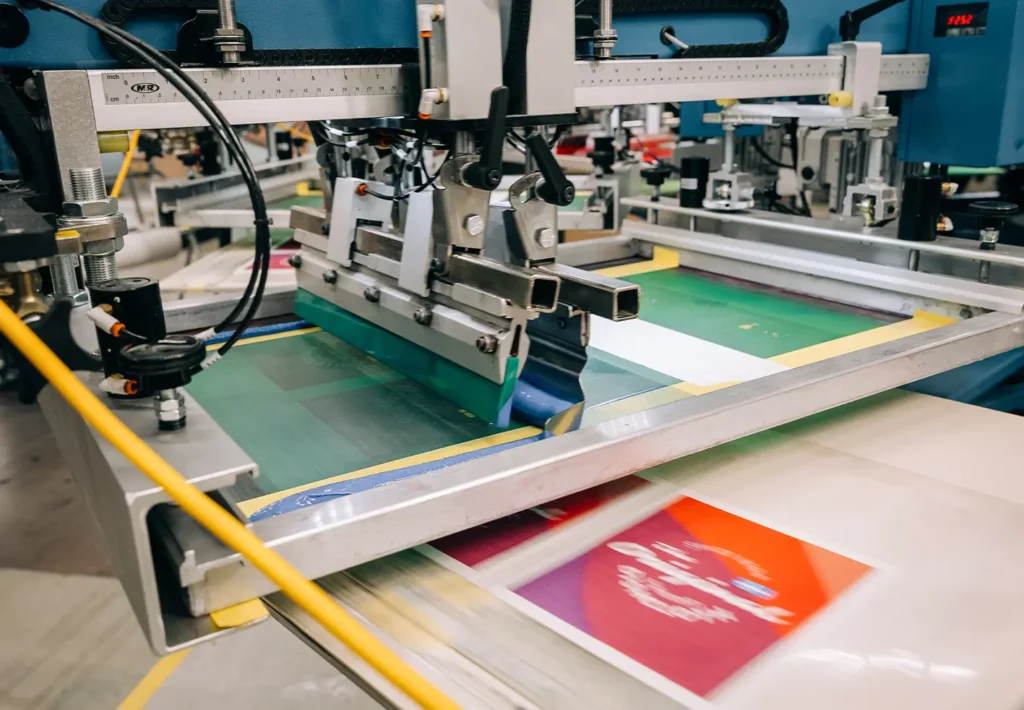
At TekoTryck, we use screen printing or digital printing. Our screen-printing inks are water-based. Both printing methods are followed by oven fixation.
Use and reuse
The dishcloth absorbs up to 15 times its own weight, can be washed at up to 95°C and can be reused many times.
Biodegradability
Printed dishcloth samples have been tested by an external laboratory, showing a high degree of biodegradation in soil under controlled conditions.
Swedish Dishcloths – Materials and Properties
Cleaning cloths and sponges can vary widely in material and performance. This table describes the properties of TekoTryck’s Swedish dishcloths without making general comparisons with synthetic alternatives.
| Feature | TekoTryck’s Swedish dishcloth |
|---|---|
| Material | 70% cellulose and 30% waste cotton |
| Synthetic fibres in the base material | None |
| Biodegradability | Externally tested; high degree of biodegradation in soil under controlled conditions |
| Absorption | Up to 15 times its own weight |
| Cleaning | Machine washable at up to 95°C; dishwasher-safe or can be boiled |
| Reusable | Yes, can be cleaned and used many times |
| Base material | Produced in Sweden or Germany |
| Printing | In Sölvesborg, Sweden |
| Printing methods | Screen printing and digital printing |
Because the base material is made from cellulose and cotton, it does not contain synthetic plastic fibres.
About TekoTryck
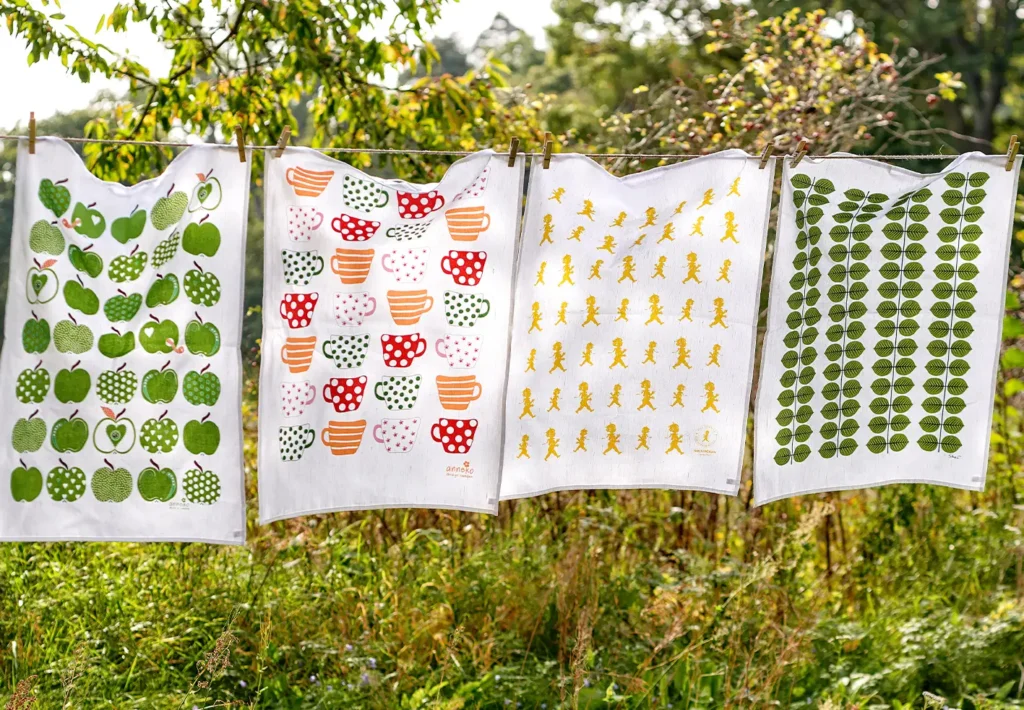
TekoTryck is a family-owned printing company in Sölvesborg, Sweden, founded in 1984. In 1994, we were the first to introduce custom-printed Swedish dishcloths. Since 1984, we have printed more than 30,000 unique designs across dishcloths, kitchen towels and other products.
We offer screen printing and digital printing at our own factory in Sölvesborg and supply customers in more than 70 countries. We help businesses, designers and resellers create products featuring their own designs. You design – We print!
Frequently Asked Questions About Biodegradable Swedish Dishcloths
Are TekoTryck’s Swedish dishcloths biodegradable?
Yes. TekoTryck’s Swedish dishcloths are biodegradable. External laboratory tests on printed dishcloth samples have shown a high degree of biodegradation in soil under controlled conditions.
What are Swedish dishcloths made from?
TekoTryck’s Swedish dishcloths are made from 70% cellulose and 30% waste cotton from the textile industry. The base material contains no synthetic plastic fibres.
Do Swedish dishcloths contain microplastics?
The base material consists of cellulose and cotton and contains no synthetic plastic fibres.
Can Swedish dishcloths be washed in a washing machine?
Yes. TekoTryck’s dishcloths can be washed in a washing machine at up to 95°C, cleaned in a dishwasher or boiled. They can be used again and again.
Can a biodegradable dishcloth be composted?
Biodegradable does not automatically mean certified for home composting. Follow your local waste disposal guidelines.
Where are TekoTryck’s Swedish dishcloths made?
The base material is produced in Sweden or Germany. All printing takes place at TekoTryck’s own factory in Sölvesborg, Sweden.
Are printed Swedish dishcloths also biodegradable?
External laboratory tests on printed dishcloth samples have shown a high degree of biodegradation in soil under controlled conditions.
Can I order biodegradable Swedish dishcloths with my own design?
Yes. TekoTryck offers screen printing and digital printing on Swedish dishcloths. Digital printing starts from 100 pcs per design. For screen printing, the minimum order is normally 500 pcs per design for 1–2 colours and 1,000 pcs for 3–4 colours.
Swedish Dishcloths with Your Own Design
Interested in ordering Swedish dishcloths with your own artwork? Contact us at info@tekotryck.se or call +46 456 132 53. We will be happy to help you choose a printing method, order quantity and packaging solution.