A Swedish dishcloth is a practical, reusable cleaning cloth made from 70% cellulose and 30% cotton remnants from textile production. It absorbs up to 15 times its own weight and can be cleaned in the washing machine, dishwasher or by boiling. Invented in Sweden in 1949, the Swedish dishcloth has become a familiar everyday product in many countries. TekoTryck has been printing custom designs on Swedish dishcloths in Sölvesborg, Sweden, since 1994 and supplies customers in more than 70 countries.
What Is a Swedish Dishcloth?
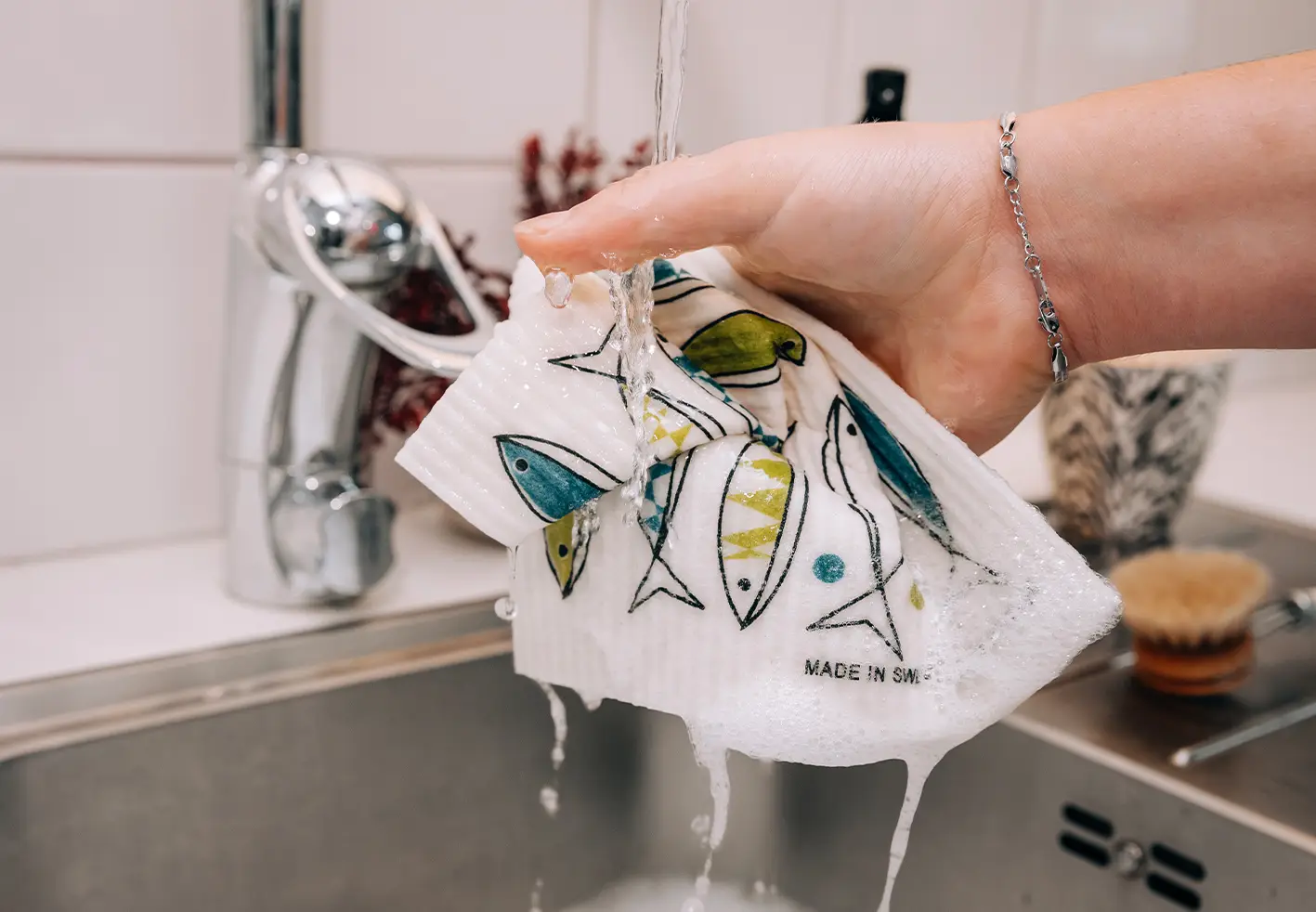
A Swedish dishcloth is a thin, flexible cloth that becomes soft when wet and firmer as it dries. It was invented in 1949 by civil engineer Curt Lindquist in Norrköping, Sweden.
The base material used for TekoTryck’s Swedish dishcloths is produced in Sweden or Germany. The Swedish version has a smooth back, while the German version has a diamond-patterned back. All printing takes place at our own factory in Sölvesborg.
What Are Swedish Dishcloths Made Of?
Swedish dishcloths are made from two materials:
- 70% cellulose: A plant-based material produced from wood-based raw materials.
- 30% cotton remnants: Cotton fibres from textile industry surplus.
The base material contains no synthetic plastic fibres. Swedish dishcloths are biodegradable, and they can be cleaned and reused many times. Printed dishcloth samples have been tested for biodegradation in soil under controlled laboratory conditions, with a very high degree of degradation observed. Read more in our article about biodegradable dishcloths (in Swedish).
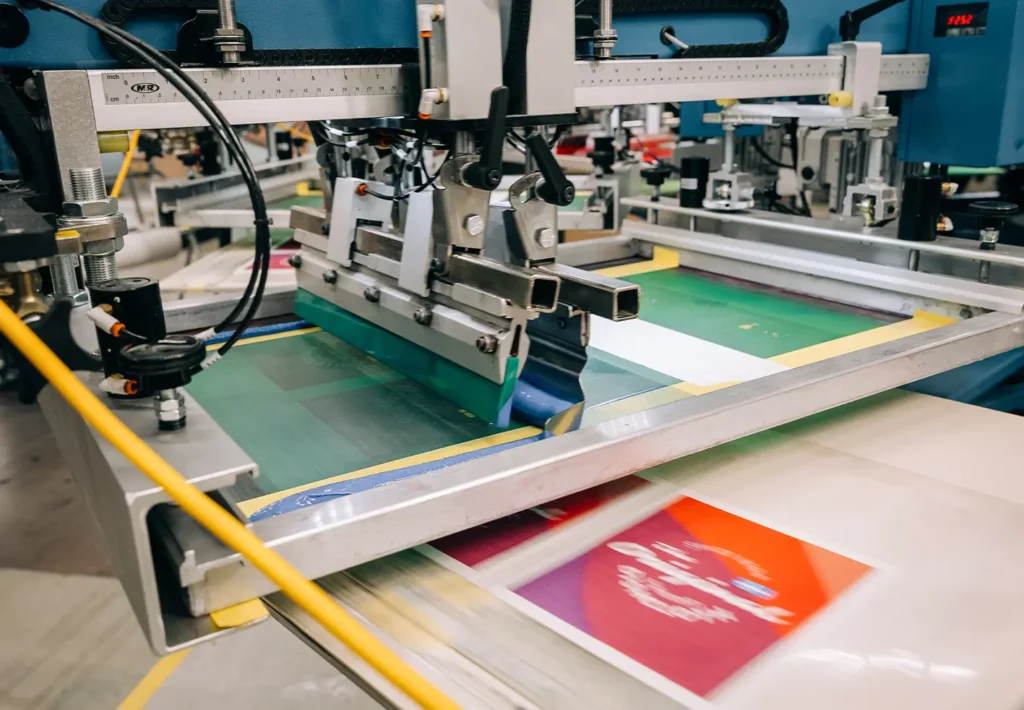
At TekoTryck, we offer both screen printing and digital printing on Swedish dishcloths. Both methods use water-based inks, and the print is fixed in an oven. All printing takes place in Sölvesborg, Sweden.
Key Properties of Swedish Dishcloths
- Absorb up to 15 times their own weight.
- Dry quickly between uses.
- Can be machine washed at up to 95°C.
- Can also be cleaned in the dishwasher or boiled.
- Can be used again and again.
- Made from 70% cellulose and 30% cotton remnants.
- Biodegradable; the degree of degradation depends on conditions.
How to Use a Swedish Dishcloth
In the kitchen
Use it to wipe surfaces, absorb spills and dry dishes. Rinse and let it dry between uses.
For pet care
An older, clean dishcloth can be handy for wiping muddy paws after a walk.
On your bicycle
Keep a dishcloth handy for wiping rainwater from your bicycle seat. Wring it out and use it again.
For plant care
A damp dishcloth is useful for gently wiping dust from plant leaves and cleaning windowsills.
Growing cress
Place a clean, damp dishcloth on a plate, spread cress seeds over it and keep it moist. The seeds will begin to germinate after a few days.
For outdoor clothing
Use a damp dishcloth to remove small marks from outdoor clothing when a full wash is not needed. Always follow the garment’s care instructions.
Swedish Dishcloths as Design Products
The Swedish dishcloth has developed from a household essential into a popular design and promotional product. In 1994, TekoTryck was the first to introduce custom-printed Swedish dishcloths. Since then, we have helped designers, companies and retailers create products with their own designs.
Printed Swedish dishcloths are used for:
- Corporate giveaways and promotional products
- Souvenirs and gifts
- Design products for retail
- Fundraising products for organisations and schools
TekoTryck offers printing on several Swedish dishcloth sizes:
- Standard: 172 × 200 mm
- Japan: 150 × 258 mm
- Large: 258 × 303 mm
- Extra large: 350 × 303 mm
- XXL: 400 × 303 mm
We offer both screen printing and digital printing, using water-based inks, at our factory in Sölvesborg. We also print kitchen towels and velour towels.
Swedish Dishcloths vs Paper Towels
A Swedish dishcloth can be a reusable alternative to paper towels for many everyday cleaning tasks. The two products differ in how they are used and cared for:
| Feature | Swedish Dishcloth | Paper Towels |
|---|---|---|
| Use | Can be reused many times | Generally intended for single use |
| Cleaning | Can be washed and reused | Not washable for reuse |
| Material | Cellulose and cotton remnants | Usually paper fibres |
| Absorbency | Up to 15 times its own weight | Varies by product |
| Typical tasks | Wiping surfaces and absorbing spills | Wiping surfaces and absorbing spills |
Which product is most practical depends on the task. This comparison describes how the products are used; it does not establish which has the lower overall environmental impact.
Swedish Dishcloth or Kitchen Sponge?
Swedish dishcloths and kitchen sponges are both used for cleaning, but they have different properties and uses. A Swedish dishcloth is thin and flexible, making it useful for wiping surfaces and absorbing liquid. It can be washed and reused many times. Kitchen sponges come in different materials and designs, and some are better suited to scrubbing stubborn dirt. The right choice depends on what needs cleaning.
The William Morris Collection
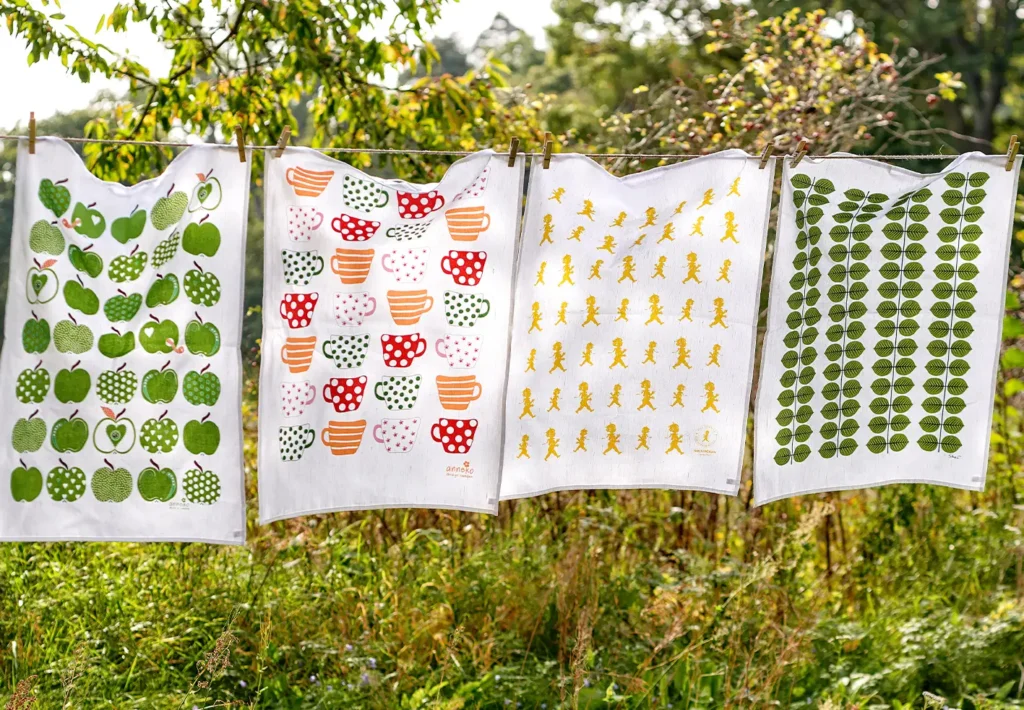
TekoTryck offers a collection featuring classic William Morris patterns through a licensing arrangement with the William Morris Society. The designs are available on Swedish dishcloths and kitchen towels and are well suited to gift shops, museum shops and other retailers. The collection includes Golden Lily, Strawberry Thief and Willow Bough.
About TekoTryck
TekoTryck is a family-owned printing company founded in 1984 in Sölvesborg, Sweden. In 1994, we were the first to introduce Swedish dishcloths with custom printing.
Since the company was founded, we have printed more than 30,000 unique designs across Swedish dishcloths, kitchen towels and other products. Today, we offer both screen printing and digital printing at our own factory in Sölvesborg and supply customers in more than 70 countries worldwide.
We help companies, designers and retailers create custom-printed products. You design – We print!
Frequently Asked Questions About Swedish Dishcloths
What is a Swedish dishcloth made of?
TekoTryck’s Swedish dishcloths are made from 70% cellulose and 30% cotton remnants from textile production.
How long does a Swedish dishcloth last?
A Swedish dishcloth can be washed and reused many times. Its lifespan depends on how it is used and cleaned.
How do you clean a Swedish dishcloth?
TekoTryck’s Swedish dishcloths can be machine washed at up to 95°C, cleaned in the dishwasher or boiled. Allow the cloth to dry between uses and replace it when worn out.
Can you put a Swedish dishcloth in the dishwasher?
Yes. TekoTryck’s Swedish dishcloths can be machine washed at up to 95°C, cleaned in the dishwasher or boiled. They can be reused again and again.
How much can a Swedish dishcloth absorb?
A Swedish dishcloth can absorb up to 15 times its own weight.
Are Swedish dishcloths biodegradable?
Yes. TekoTryck’s Swedish dishcloths are biodegradable. Printed dishcloth samples have undergone external laboratory testing in soil under controlled conditions, showing a very high degree of degradation. Results apply to the tested samples and conditions.
Who invented the Swedish dishcloth?
The Swedish dishcloth was invented in 1949 by civil engineer Curt Lindquist in Norrköping, Sweden.
Where are TekoTryck’s Swedish dishcloths made?
The base cloth is made in Sweden or Germany. All screen printing and digital printing is carried out using water-based inks at TekoTryck’s factory in Sölvesborg, Sweden.
Can I order Swedish dishcloths with my own design?
Yes. TekoTryck offers digital printing from 100 pieces per design and screen printing normally from 500 pieces per design for one or two print colours. Contact info@tekotryck.se for more information.