Swedish dishcloths are 100% biodegradable, made entirely from natural materials: 70% cellulose from well managed forests and 30% cotton from textile industry byproducts. No microplastics, no synthetic waste.
What Makes a Dishcloth Biodegradable?
A biodegradable dishcloth is one that decomposes naturally through biological processes without leaving synthetic residue. The Swedish dishcloth meets this criteria completely because of its composition:
- Cellulose (70%): Derived from wood waste from well managed forests. The wood is converted into cellulose at a pulp factory, then transformed into viscose at the dishcloth factory.
- Cotton (30%): Sourced from textile industry byproducts — repurposing waste material that would otherwise be discarded.
Both materials are organic. This has been the case since 1949, when civil engineer Curt Lindquist invented the Swedish dishcloth in Norrkoping, Sweden.
There are only two factories in the world that manufacture the Swedish dishcloth — one in Sweden and one in Germany.
The Life Cycle of a Swedish Dishcloth
1. The cellulose is made from wood-based raw material.
2. The raw material is processed into cellulose at a pulp mill.
3. The cellulose is converted into viscose and blended with cotton from textile industry surplus to create the cloth.
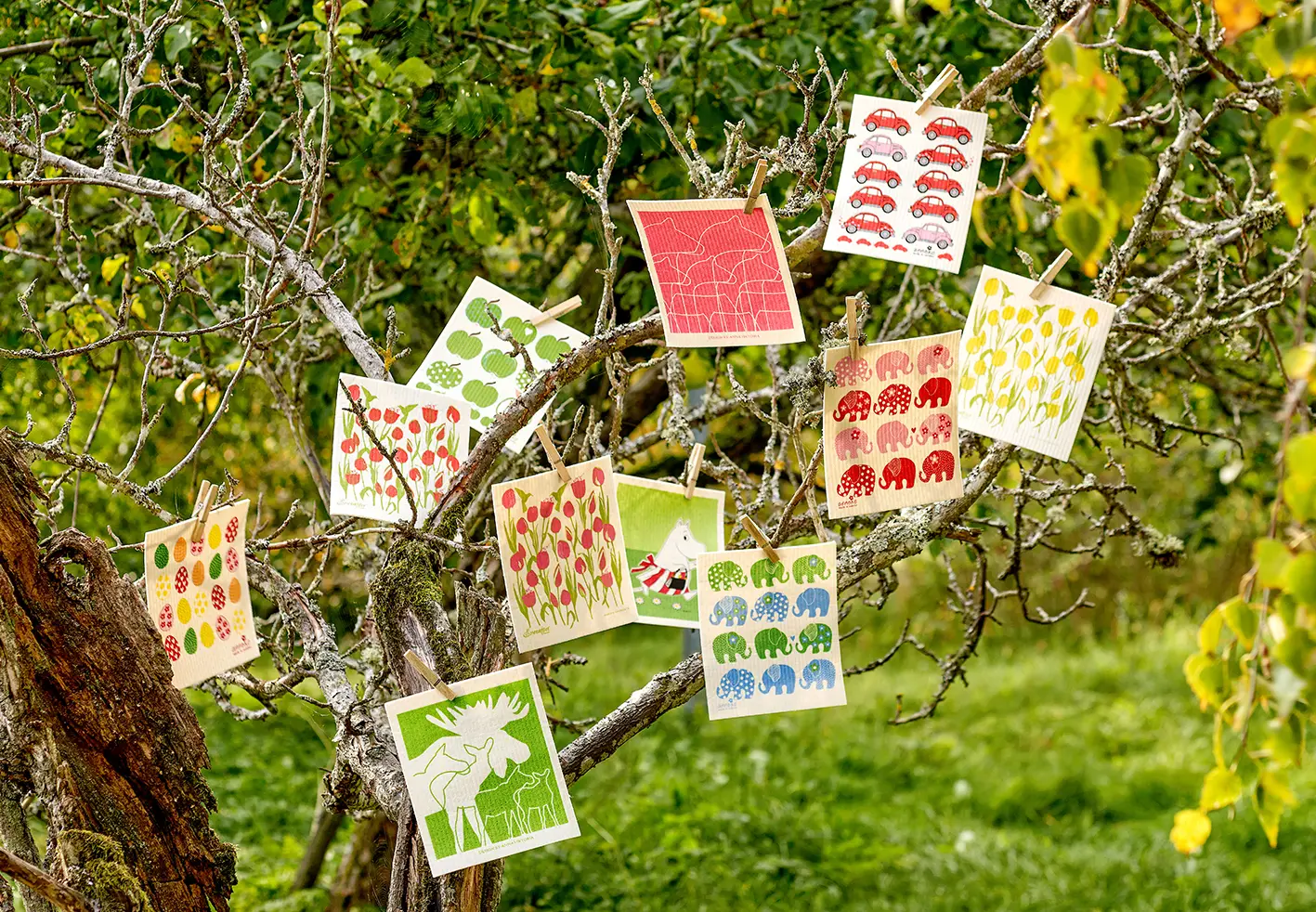
4. Printing with water based colours — at TekoTryck, we use water-based colours blended in our own colour lab.
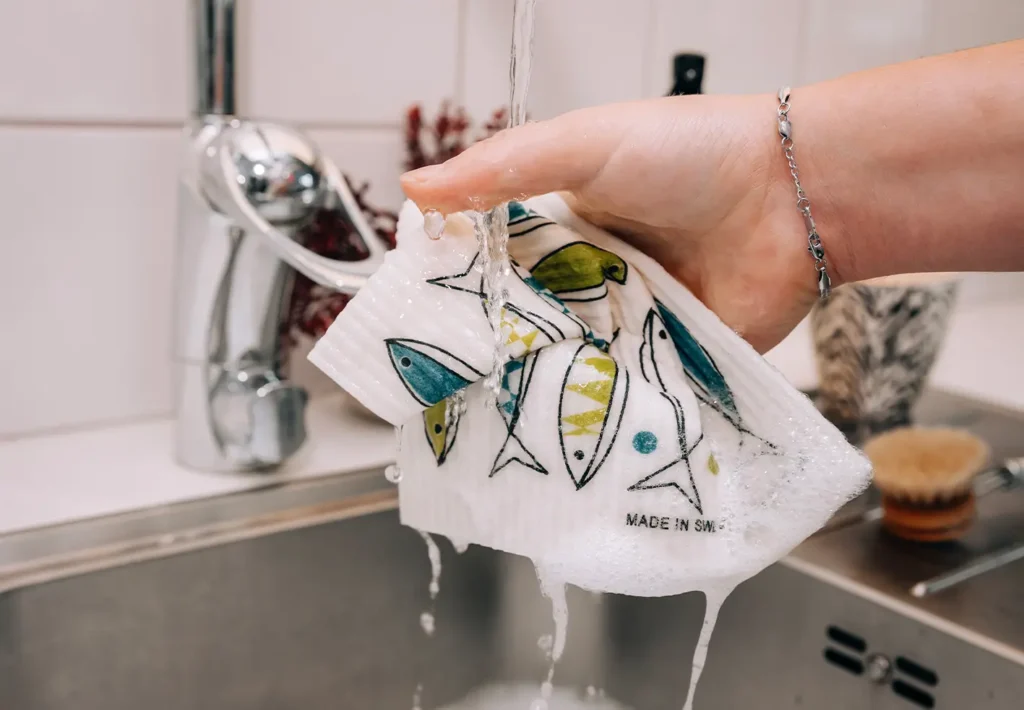
5. Use and reuse — the cloth absorbs up to 15 times its own weight, is machine washable at 95 degrees Celsius and can be boiled.
6. After use, the material is biodegradable.
Why Biodegradable Matters: Swedish Dishcloths vs Synthetic Alternatives
Feature
Swedish Dishcloth
Synthetic Sponge/Cloth
Material origin
Well managed forest + cotton waste
Petroleum-based plastics
Biodegradable
100%
No (or centuries)
Microplastic release
None
Yes, during washing
Absorption
15 times its weight
Varies
Washable
100 degrees C
Limited
Renewable material
Yes
No
Multiple Uses, Extended Life
3. The cellulose is converted into viscose and blended with cotton from textile industry surplus to create the cloth.
4. Printing with water based colours — at TekoTryck, we use water-based colours blended in our own colour lab.
5. Use and reuse — the cloth absorbs up to 15 times its own weight, is machine washable at 95 degrees Celsius and can be boiled.
6. After use, the material is biodegradable.
Why Biodegradable Matters: Swedish Dishcloths vs Synthetic Alternatives
Feature
Swedish Dishcloth
Synthetic Sponge/Cloth
Material origin
Well managed forest + cotton waste
Petroleum-based plastics
Biodegradable
100%
No (or centuries)
Microplastic release
None
Yes, during washing
Absorption
15 times its weight
Varies
Washable
100 degrees C
Limited
Renewable material
Yes
No
Multiple Uses, Extended Life
5. Use and reuse — the cloth absorbs up to 15 times its own weight, is machine washable at 95 degrees Celsius and can be boiled.
6. After use, the material is biodegradable.
Why Biodegradable Matters: Swedish Dishcloths vs Synthetic Alternatives
Feature
Swedish Dishcloth
Synthetic Sponge/Cloth
Material origin
Well managed forest + cotton waste
Petroleum-based plastics
Biodegradable
100%
No (or centuries)
Microplastic release
None
Yes, during washing
Absorption
15 times its weight
Varies
Washable
100 degrees C
Limited
Renewable material
Yes
No
Multiple Uses, Extended Life
Why Biodegradable Matters: Swedish Dishcloths vs Synthetic Alternatives
| Feature | Swedish Dishcloth | Synthetic Sponge/Cloth |
|---|---|---|
| Material origin | Well managed forest + cotton waste | Petroleum-based plastics |
| Biodegradable | 100% | No (or centuries) |
| Microplastic release | None | Yes, during washing |
| Absorption | 15 times its weight | Varies |
| Washable | 100 degrees C | Limited |
| Renewable material | Yes | No |
Multiple Uses, Extended Life
The biodegradable nature of Swedish dishcloths does not mean they are fragile. Before disposal, a single dishcloth serves many purposes:
- Kitchen and bathroom surface cleaning
- Absorbing spills (up to 15 times its weight)
- Wiping dirty pet paws
- Cleaning bicycle seats
- Caring for houseplants
- Growing cress (as a growing medium)
- Wiping outdoor clothing instead of machine washing
Machine washable at up to 95 °C and suitable for boiling, the dishcloth can be reused many times throughout its lifespan.
About TekoTryck
TekoTryck AB was founded in 1984 in Solvesborg, Sweden. In 1994, we became the first company in the world to screen-print designs on Swedish dishcloths. Today, led by CEO Johanna Olofsson, we deliver to over 800 customers in more than 70 countries.
We have printed more than 20,000 unique artworks on Swedish dishcloths and have been recognised with the Di Gasell 2023 award from Dagens Industri for being among Sweden’s fastest-growing companies.
Frequently Asked Questions
Are Swedish dishcloths biodegradable?
Yes, 100%. They are made from 70% cellulose from well managed forests and 30% cotton from textile industry byproducts.
Do Swedish dishcloths release microplastics?
No. Swedish dishcloths are made entirely from natural materials (cellulose and cotton) and do not release microplastics during washing or use.
Where are biodegradable Swedish dishcloths manufactured?
The base cloth is produced in Sweden and Germany. At TekoTryck in Solvesborg, Sweden, we print designs using water-based colours.
How many times can a Swedish dishcloth be reused?
Many times. Swedish dishcloths are machine washable at up to 95 °C and can also be boiled, so they can be used again and again before disposal.